The benefits of living walls
Living walls bring measurable benefits, from cleaner air and energy savings to improved health and wellbeing. Learn how living walls benefit the environment, help communities, and drive ROI.


What is a living wall?
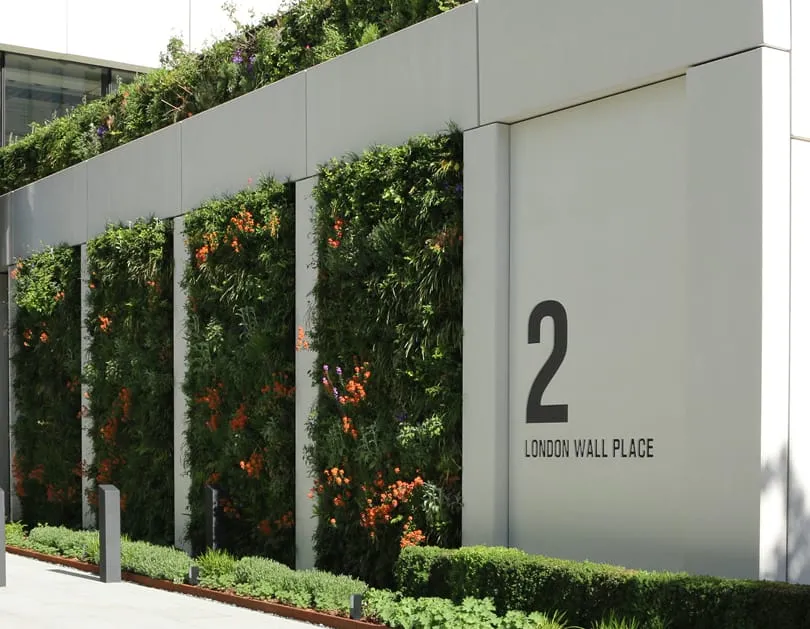
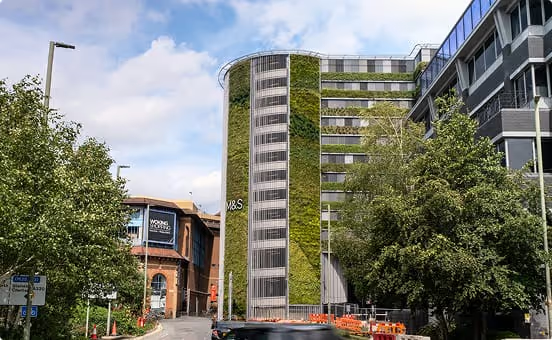
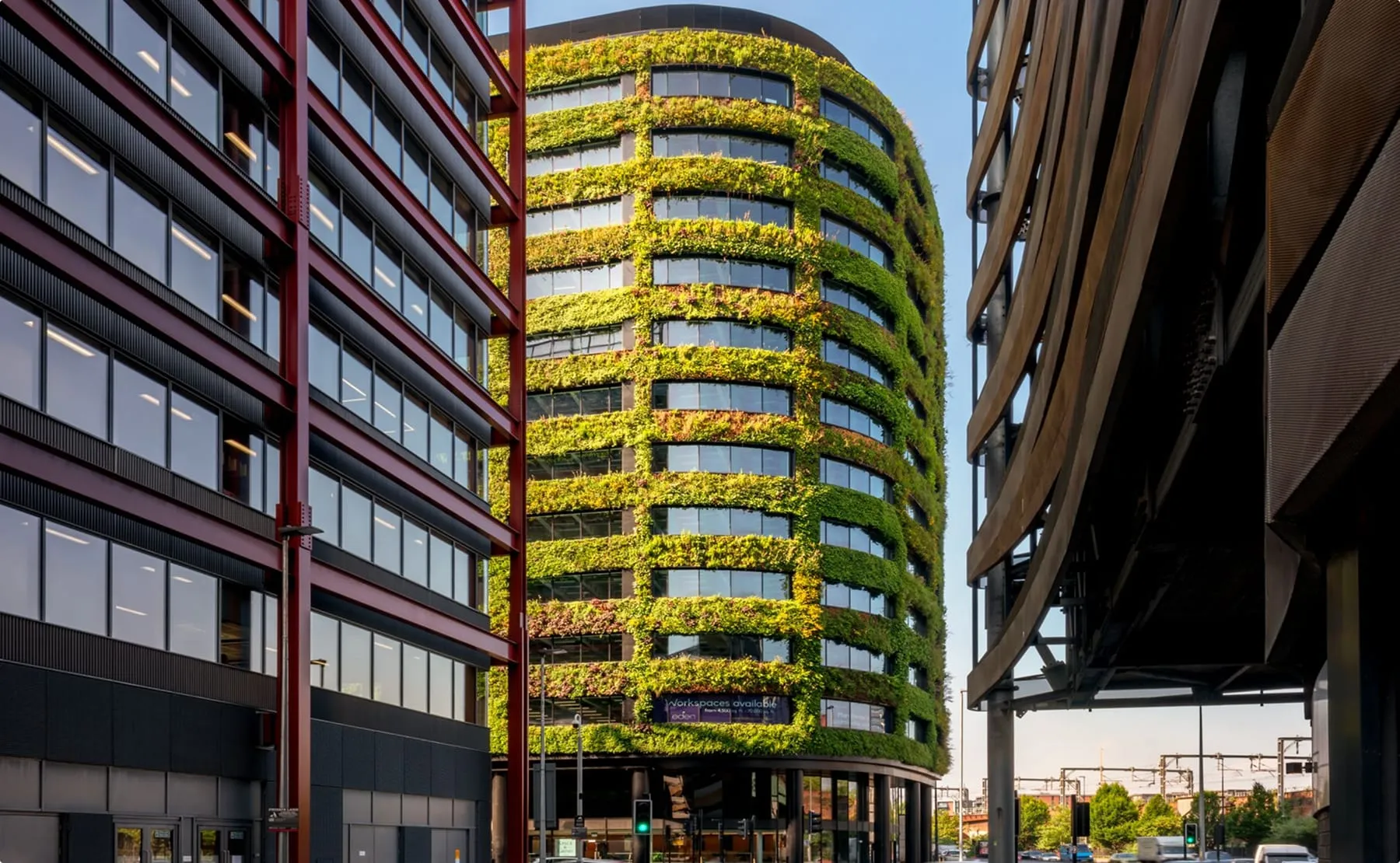
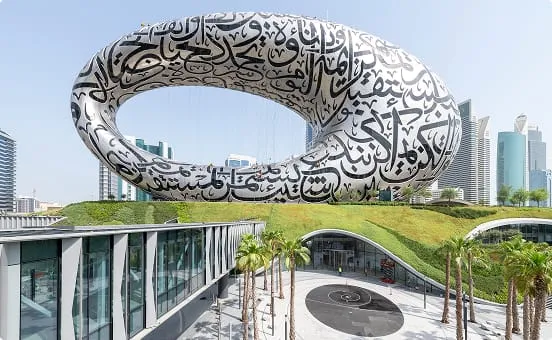
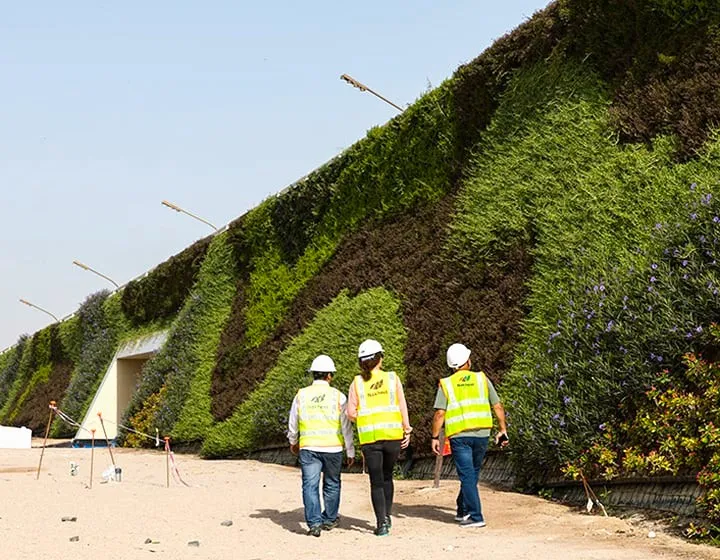
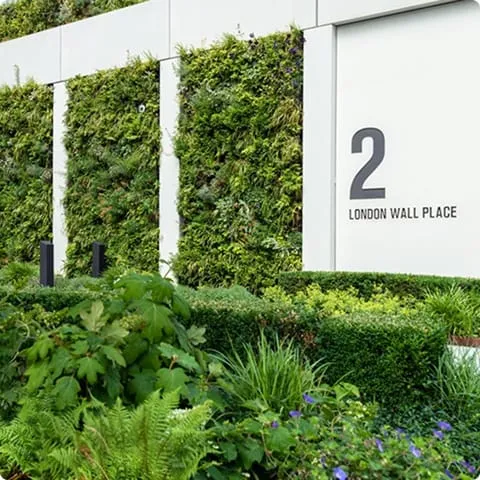
A living wall is an engineered vertical garden that attaches to a building’s exterior façade or interior wall. “Living wall” is often used interchangeably with “green wall,” but the terms have different meanings.
The difference between living walls & green walls
Green wall is the umbrella term for any vertical greening system, including artificial or faux versions designed purely for aesthetics.
Living walls stand apart as true living systems, using real, actively growing plants to achieve meaningful environmental benefits.



Proven benefits of living walls
Studies consistently show that green walls deliver measurable value.
boost in real estate values for buildings with plants nearby
increase in retail customer spend
How living walls benefit the environment

Pollinator support
Native flowering plants in living walls offer continuous forage across seasons for bees, butterflies, and pollinating insects. They also connect isolated green spaces, helping pollinators move safely through cities.

Temperature regulation
Vegetation helps cool cities by shading surfaces and reducing heat absorption. Living walls can lower surrounding temperatures by several degrees, reducing the ‘urban heat island’ effect.



Better air quality
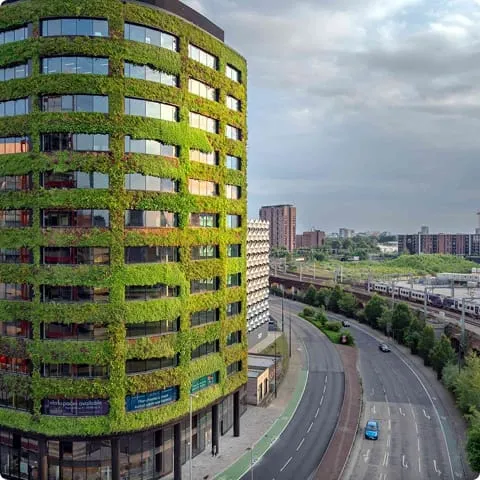
Living walls act as natural air filters, absorbing pollutants like carbon and dust while producing oxygen. This can make a noticeable difference — especially in industrial or high traffic areas.

Habitat creation
Birds, burrowing insects, and small mammals including bats and squirrels can find shelter within a living wall's foliage and soil. This is especially valuable in areas where green space is scarce.

Rainwater management
Living walls are key solutions for urban water management. By absorbing rainfall, they ease the burden on drainage systems and reduce flood risk. They can also can harvest rainwater to provide a sustainable alternative to mains supply.
How living walls help communities

Health and wellbeing
By reconnecting people with nature, biophilic design supports emotional wellbeing and reduces stress levels. Studies show that even just looking at nature can lift your mood.

Sound insulation
Living walls absorb outdoor sound through plants and soil, reducing ambient noise. In studies, they’ve lowered noise levels by up to 15dB —similar to the effect of foam earplugs.

Workplace benefits
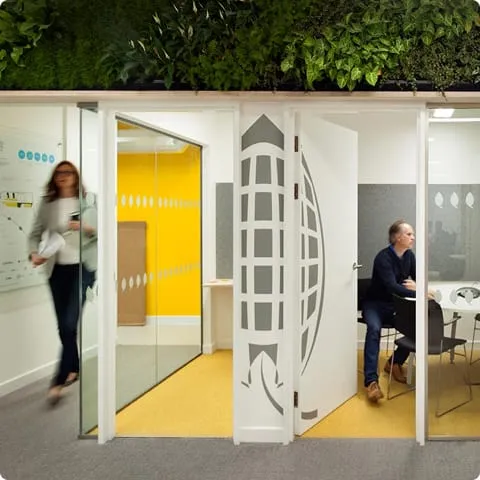
Research has found that people working in an environment with plants were 12% more productive6. They are also more creative and take fewer sick days, on average.

Social impact
Green spaces are linked to safer communities. Access to nature is associated with lower risk of crime and vandalism7.
How living walls drive ROI

Planning and regulation
Living walls help developments meet required targets for Urban Greening Factor and Biodiversity Net Gain. They also help to achieve building standards such as BREEAM and WELL.

Protective cladding
Living walls are a natural shield against wind, rain, UV radiation, and pollution. When compared to cladding, paint, and other coatings which deteriorate, greenery also looks better, longer.

Energy efficiency
By insulating façades and reducing surface temperatures by up to 15°C8, living walls improve a building’s thermal performance — helping to save energy and lower costs.


Property value
A green façade adds kerb appeal and long-term value to both commercial and residential developments. Up to 20% increase in property value has been noted.
Visual impact
You can tailor a living wall to make the impact you’re after — whether that’s highlighting your logo, leaving a strong impression, or conveying your company’s commitment to sustainability.

Retail spaces
Green features boost rental value and retail performance. Studies link the use of vegetation to increases in rental rates on retail spaces, and increased customer spend of 8-12%.

How to maximise the benefits of your green wall
The best way to maximise the benefits of your green wall is choosing a soil-based growing substrate. Unlike hydroponic systems or synthetic mediums, soil allows plants to grow in their natural environment — supporting healthier greenery and a greater overall impact.
How natural substrate maximises living wall benefits:
Improved biodiversity: Soil supports a wider range of plant species, including native plants.
Greater resilience: Plants growing in soil develop stronger roots, helping them live out their full life cycle.
Water efficiency: Soil retains moisture, which uses less water and protects plants from drying out quickly if irrigation ever falters.
Environmental impact: By providing habitats for insects and filtering the air, soil meaningfully contributes to biodiversity net gain.
Living walls vs. living roofs
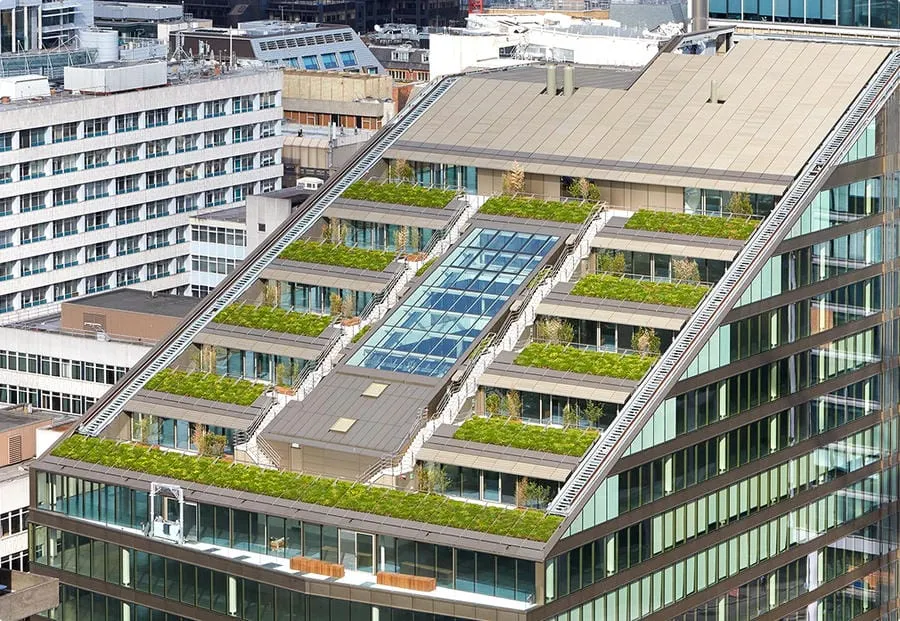
Both types of green infrastructure offer meaningful advantages for people, the planet, and properties, but they can vary in visibility and impact. Every project is unique, and we can help you find the right solution for yours.
In many cases, we recommend living walls when:
- You want to make a visual impact the entire city can see.
- You’re interested in custom design elements, like “planting” your logo.
- Your project involves certain structural or waterproofing concerns.
- You need to maximise green coverage in a project where rooftop space is limited.




References
- Abhijith, K. V. et al. (2017). “Air pollution abatement performances of green infrastructure in open road and built‑up street canyon environments.” https://www.sciencedirect.com/science/article/pii/S1352231017303151
- Grant, G., & Gedge, D. (2019). “Living Roofs and Walls from policy to practice: 10 years of urban greening in London and beyond.” https://livingroofs.org/wp-content/uploads/2019/04/LONDON-LIVING-ROOFS-WALLS-REPORT-2019.pdf
- Vox, G., Blanco, I., & Schettini, E. (2018). Green façades to control wall surface temperature in buildings.” https://www.sciencedirect.com/science/article/pii/S0360132317305607
- American Society of Landscape Architects. “Greening your home.” https://www.asla.org/news-insights/dirt/how-to-use-developers-economic-language-(part-ii)
- Estimate based on Viritopia’s own calculation using standard carbon conversion factors: assuming dry plant biomass contains 47.5 % carbon (average for plant tissue) and using a molecular weight ratio of 3.67 to convert carbon to CO₂ equivalents. This yields an approximate relationship of 1 kg dry biomass = 1.75 kg CO₂ captured. Values may vary depending on plant species and composition.
- Urban Planters. “Health & Green: Living and Working with Plants.” (2020). https://www.urbanplanters.co.uk/wp-content/uploads/2020/06/Health-Green-Living-Working-With-Plants-Brochure.pdf
- Ogletree, S. Scott et al. “Urban greenspace linked to lower crime risk across 301 major U.S. cities.” (2022). https://www.sciencedirect.com/science/article/pii/S0264275122003882
- Ouldboukhitine, S. et al. (2025). “Modular green walls: A sustainable architectural solution for energy efficiency in oceanic climates.” https://www.sciencedirect.com/science/article/abs/pii/S0378778825005808
Have questions about living walls?
We’d love to answer them. Get in touch to book a call, or check out our CPDs if you're learning as a team.