
Living Walls & Green Roofs for Urban Water Management
The growing risk of flash flooding
Cities have a rain problem: too much water, in too little time, with too few places for it to go. Climate change is bringing more intense rainfall, increasing pressure on urban drainage systems that are already struggling to cope.
The Greater London Authority has identified flash flooding as one of the greatest environmental risks to London. More broadly, an estimated one in 10 Europeans who live in an urban area currently lives in a flood-risk zone.
Green infrastructure can help capture rainfall and slow runoff. Learn how living green walls and roofs support urban water management and where they fit into the Sustainable Drainage Systems (SuDS) framework.
How green infrastructure supports urban water management
Buildings and pavement interrupt the natural water cycle. Instead of soaking into soil or vegetation, rainfall runs across hard surfaces into drainage systems, often carrying pollutants such as heavy metals and oils.
Urban greening helps cities “soak up” more rain and slow its journey into drainage systems. It involves using blue-green infrastructure: sustainable drainage and water storage solutions, combined with green infrastructure like living walls and living roofs.
Living walls for sustainable water management
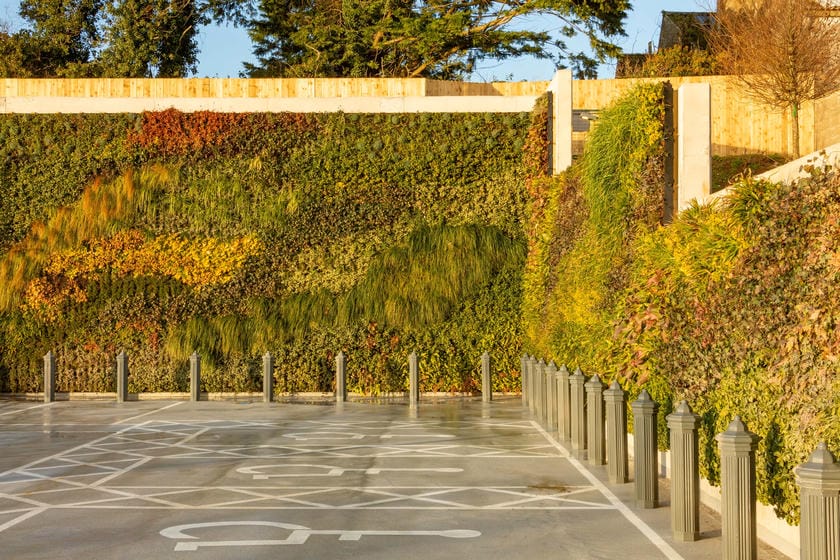
Living walls turn a building’s vertical surface into an area that can absorb water before it hits the ground. They help mitigate flooding and contamination by:
- Absorbing rainwater: The vegetation and soil in green walls can absorb significant amounts of rainwater.
- Slowing runoff: Living walls retain water within their plants and growing media. Some returns to the atmosphere through evapotranspiration, while excess water drains more gradually. When integrated with an attenuation tank, water can also be stored for controlled release.
- Reusing water: Living walls with rainwater harvesting tanks can store captured water for irrigation, reducing demand on mains water.
- Reusing water: Living walls with rainwater harvesting tanks can store captured water for irrigation, reducing demand on mains water.
- Filtering pollutants: Plants and soil can help filter pollutants as water passes through the living wall. Some plants can also absorb, break down, or contain certain contaminants through a process called phytoremediation.
Important note: Soil-based living wall systems like Viritopia’s are particularly well suited for water management (rather than hydroponic or wire-and-climber systems), as the soil helps capture and store the water.
Green and blue roofs for water management
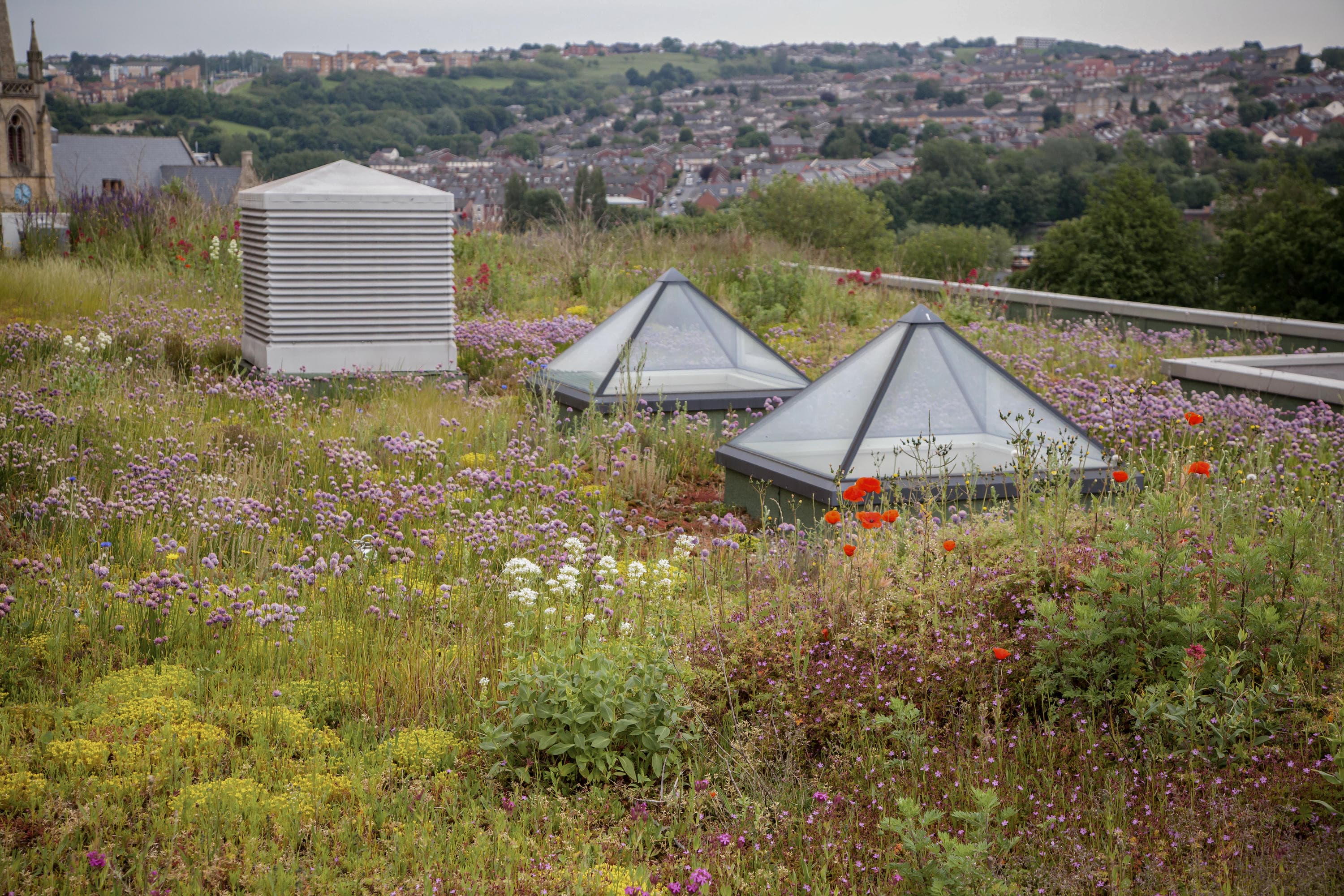
Green roofs manage rainwater by collecting and retaining rainfall in their vegetation, substrate, and drainage layers. This reduces the volume of runoff and delays it, helping reduce pressure on drainage systems. As water passes through the roof, the vegetation can also help filter pollutants.
Blue roofs are designed specifically for water management. They temporarily collect and store rainwater at roof level and release it at a controlled rate. Blue roofs can be combined with vegetation to create blue-green roofs, which bring together rainwater management with the wider benefits of a green roof.
Living roofs and walls can also work together across a development, intercepting rainfall at different surfaces before it reaches ground-level drainage.
Sustainable drainage systems (SuDS) and green infrastructure
Sustainable drainage systems (also called sustainable urban drainage systems) aim to manage water naturally. Rather than sending rainfall directly into sewers to carry it away, SuDS aim to capture, manage, and utilise surface water close to its source, reducing runoff.
SuDS strategies include infiltration (the process where water soaks into the earth), attenuation, rainwater harvesting, and green infrastructure.
SuDS are being built into planning requirements in the UK and across Europe:
- In England, most major developments are expected to incorporate SuDS.
- In Scotland, SuDS are a strict requirement for almost all new developments.
- Directives across the EU are increasingly prioritising green and blue infrastructure for stormwater management.
For new developments that must meet sustainable drainage requirements, living walls and green roofs can form part of a compliant drainage strategy.
Where living walls fit in the SuDS drainage hierarchy
Not all methods of managing surface water are considered equal. The Draft London Plan’s GHR5 Drainage Hierarchy categorises drainage strategies from most to least preferred.
Living walls and roofs can contribute at two of the hierarchy’s preferred levels:
- Rainwater reuse: Rainwater captured from a building can be stored and used to irrigate a living wall, reducing demand on mains water.
- Green infrastructure attenuation: The plants and growing medium capture and retain rainfall, slowing its journey into the drainage system.
The amount of rainfall a living wall can intercept depends on factors including the system, substrate depth, plant density, and rainfall event. Studies published in 2017 and 2018 suggest living walls can capture 10-50% of incident rainfall.
Want to see an example?
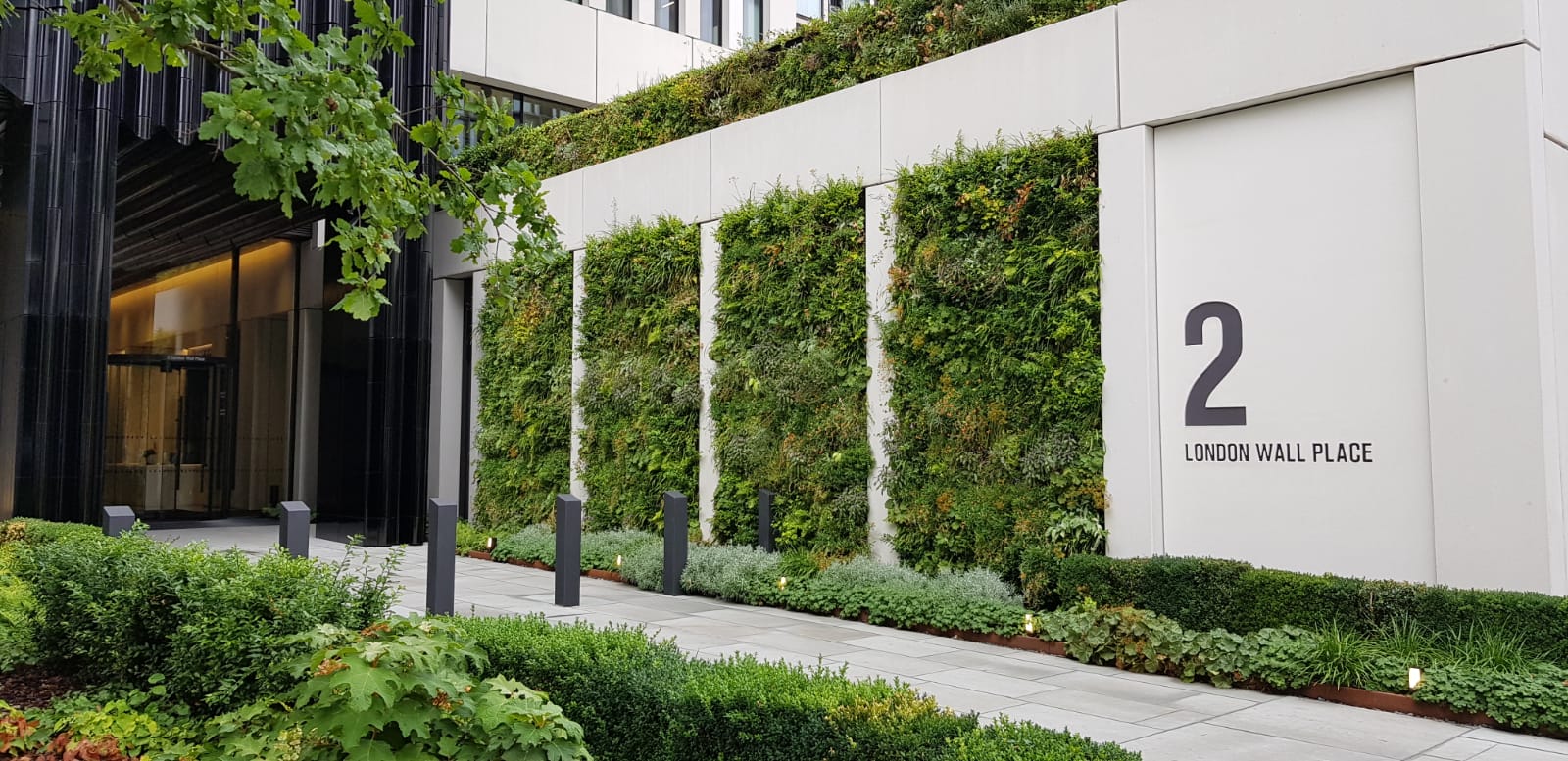
Eden at New Bailey features living walls and a 20,000-litre attenuation tank. Together, the living wall and rainwater attenuation tank capture, store, and reuse rainwater.
Irrigation is adjusted according to the weather, helping maximise water use and reduce mains water demand.
_%20compressed.jpeg)
Specifying living walls for water management
If you’re considering a living wall as part of your SuDS compliance strategy for a new development, it’s important to consider how much water the wall will need and how you’ll optimise water use during the planning stage.
How much water does a living wall use?
Our data shows that a mature modular living wall in average UK conditions can use around 1.1 litres of water per m² per day. This is an annual average, as water consumption is higher during hot, dry periods and lower during cooler, wetter months.
Actual water consumption varies considerably according to factors including:
- Location
- Season
- Weather
- System type (soil modules vs. hydroponic vs. climbing systems)
- Plant species (we recommend using native plants)
- Wall exposure (amount of sunlight vs. shade)
How to improve living wall water efficiency
There are several ways to reduce a green wall’s mains water consumption:
- Responsive irrigation: Irrigation frequency and volume can be adjusted according to seasonal and weather conditions through our remote monitoring system.
- Rainwater harvesting: Living walls can use captured rainwater for irrigation, with mains water used as a backup.
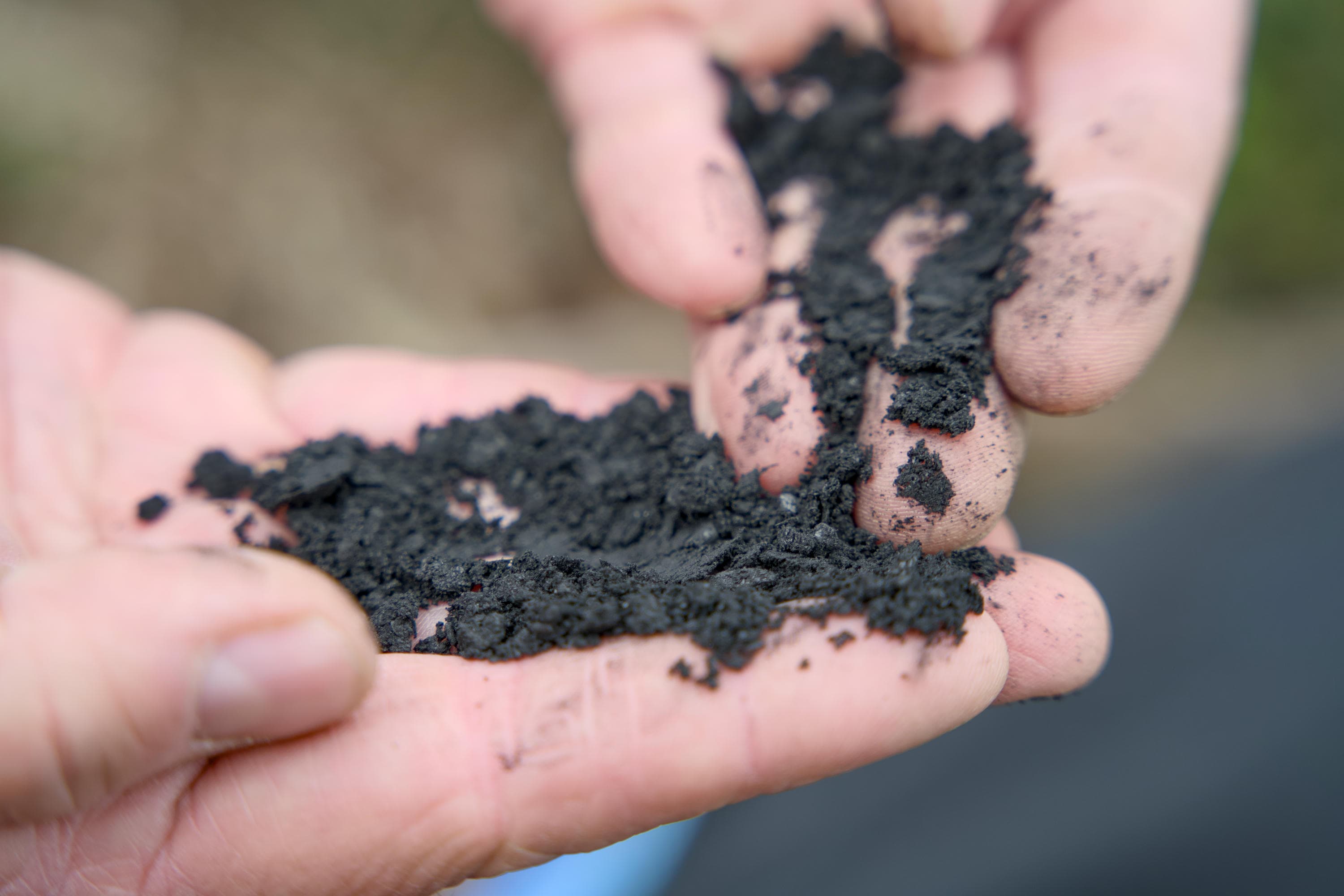
- Biochar: Adding biochar to the growing medium can improve water retention. Our own research has shown potential water savings of approximately 25-30%.
Can living walls use grey water or black water?
At Viritopia, we’re always exploring new ways to reduce the amount of water our living walls need. Recently, that’s involved researching whether grey water (wastewater from sinks and showers) and black water (wastewater from toilets) can safely irrigate living wall plants.
Initial trials at Stonehenge used grey and black water recycling for irrigation, with biochar added to help filter contaminants. We’re still evaluating the results, but further research could open up exciting new possibilities.
Tips for designing living walls into a water management strategy
The earlier in planning you consider the living wall, the more opportunities you’ll have to integrate it with the development’s wider water management strategy.
When specifying a living wall:
- Consider a soil-based system: Prioritise living wall solutions that use soil substrate, which captures and retains water.
- Choose the right plants: Use plants suited to your local climate, prioritising native species.
- Calculate the water requirement: Don’t rely on average water consumption figures. Wall size, location, orientation, exposure, planting, and local conditions all influence irrigation needs.
- Size rainwater storage for peak demand: If you’re planning to irrigate with rainwater, account for hotter, drier periods when the wall will need more water.
- Keep mains water as a backup: Maintain a mains connection as a reliable water supply in case the rainwater supply runs low.
- Connect the wall to the wider water strategy: Consider how living walls can work with green or blue roofs, attenuation tanks, rain gardens, and other SuDS measures across the scheme.
- Bring the right teams together early: Bring living wall specialists and engineers into the design process early enough to coordinate irrigation, storage, and drainage effectively.
Plan water management into your green infrastructure strategy
Planning a living wall? Reach out to us. We’ve spent close to two decades delivering hundreds of living wall projects in a range of climates and regulatory environments. We’ll help you specify the right system for your requirements, budget, climate, and goals.
Get in touch with our team to explore how living walls and roofs could support your project’s water management and SuDS strategy.
Authored by

Explore more insights
Discover the latest in green infrastructure
Urban Greening: How Cities Are Turning Grey Into Green
Viritopia’s New Guide Explores the Role of Living Walls Amidst Draft London Plan Consultation
The Viritopia® Living Wall System Achieves a Verified EPD
Biodiversity Net Gain: What It Means & How It Works

Living Wall Fire Safety: Testing, Regulation, and Risk Mitigation
Responding to the Minister for Housing and Planning: Open Letter

