
Biodiversity Net Gain: What It Means & How It Works

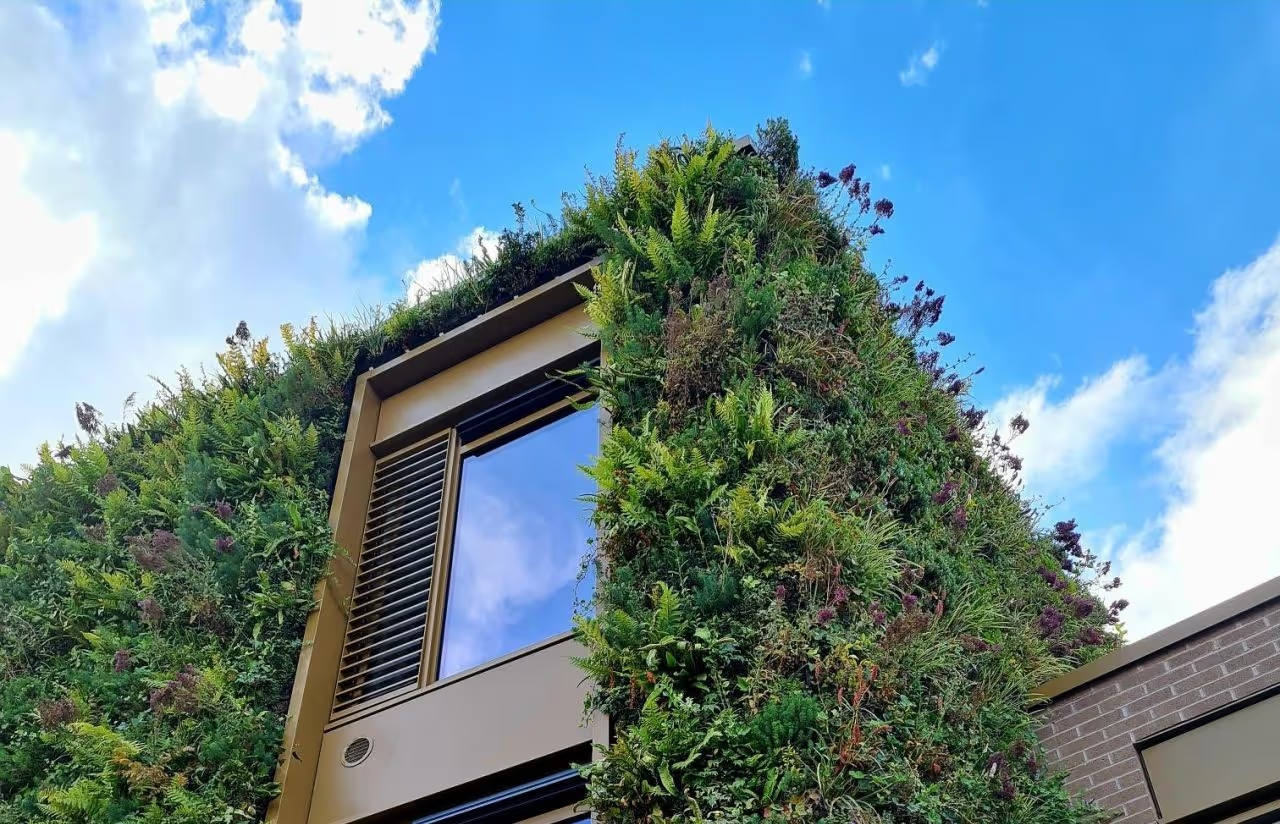
Biodiversity Net Gain is an evolving area of planning policy in the UK. Below, read a clear overview of how BNG works and what it means for your project.
The basics of BNG
What is biodiversity?
Coined in 1985 as a contraction of ‘biological diversity,’ biodiversity means the variety of life in a particular ecosystem — including animals, plants, and other organisms.
Biodiversity is often used as a means of measuring the health of an ecosystem. A lack of biodiversity in an area can lead to problems like unclean water, air pollution, species extinction, soil degradation, reduced crop pollination, and reduced resilience to climate change.
What is Biodiversity Net Gain (BNG)?
Biodiversity Net Gain (BNG) is a planning requirement designed to ensure that new development leaves nature in a better state than it was before.
"Net gain" means that after accounting for any habitat lost or damaged during development, the overall biodiversity value of the site must come out positive. More specifically, developers must demonstrate at least a 10% improvement in biodiversity value, calculated using a standardised tool called the statutory biodiversity metric.
BNG goes beyond simply preserving the nature that already exists. It requires us to measurably improve or create new habitats, and secure the health of those habitats for many years.
Why does urban biodiversity matter?
Since the 1970s, the UK has lost nearly a fifth of its wildlife species abundance — making it “one of the most nature-depleted countries on Earth,” according to State of Nature.
However, biodiversity loss is not solely a UK issue. More than half of the world’s population lives in cities, and that share is only growing. Global urbanisation has reduced habitat connectivity, weakened ecosystems, and contributed to climate change. Biodiversity net gain policy aims to reverse this trend.
Integrating nature into the built environment benefits both people and the natural world. Beyond supporting local ecology, urban biodiversity measures help:
- Reduce the urban heat island effect through shading
- Improve air quality, especially in industrial and high traffic areas
- Manage stormwater and reduce flood risk
- Support mental health and wellbeing

Is BNG a legal requirement?
Yes. BNG is mandatory for many new developments in England under the Environment Act 2021.
While BNG is specific to England, many countries and local jurisdictions have their own policies in place for habitat protection, each with varying degrees of specificity. For example, Scotland’s National Planning Framework 4 simply requires "significant biodiversity enhancements” and Welsh planning policy states that major developments “must provide a net benefit for biodiversity.”
Additionally, biodiversity enhancement is being increasingly embedded into policy across Europe, such as the EU’s Biodiversity Strategy for 2030.
When did BNG become mandatory?
In England, achieving 10% biodiversity net gain became mandatory:
- For most major housing and commercial developments: 12 February 2024
- For small sites (generally, sites smaller than one hectare): 2 April 2024
- For National Significant Infrastructure Projects (NSIPs): Expected May 2026
Does BNG apply to my project?
BNG applies to most new developments that require planning permission under the Town and Country Planning Act 1990. This includes many residential, commercial, mixed-use, and infrastructure projects.
Certain projects are exempt from BNG requirements, including developments that:
- Submitted planning applications before 12 February 2024
- Do not impact a priority habitat, and impact less than 25 square metres of on-site habitat or 5 metres of on-site linear habitat
- Fall within householder applications, such as home extension or loft conversions
- Are self-builds or custom builds containing no more than nine dwellings, on a site that is no larger than 0.5 hectares
For the complete list of BNG exemptions, visit the UK government website.
If your project requires planning permission and doesn't fall under an exemption to BNG, it is subject to the requirements. If you're unsure, speak with an ecologist or green infrastructure consultant in the early stages of planning to understand how BNG impacts your project.

How can citizens help increase local biodiversity?
Increasing biodiversity takes a team. Every plot — and person — plays a part. As a citizen, there’s plenty you can do to improve the urban biodiversity in your local area:
- Environmental education: Get younger generations involved with activities such as planting vegetables, making an insect house or starting a compost heap.
- Chemical reduction: Chemical fertilisers and pesticides harm helpful pollinators and can contaminate the soil and water. Use organic methods to care for your garden.
- Supporting bees: Make your garden more hospitable to pollinators by building a pond, planting native flowers, and composting waste.
- Native planting: A report issued by the UN listed invasive species as one of the key causes of biodiversity loss. Invasive plants can spread quickly and deplete the resources that local species need. Counteract the spread by planting plants, trees, and shrubs that are native to your local area.
How BNG works in practice
What does 10% BNG mean?
10% biodiversity net gain does not mean a 10% increase in green space. It means a 10% higher biodiversity value when compared with the site’s baseline. This is measured in a metric called biodiversity units.
Before development begins, an ecologist assesses the habitats on a site and calculates the baseline biodiversity value. After development, the site must generate a score that is at least 10% higher than before. For this reason, sites with rich habitats before development require more effort to achieve the 10% net gain.
How is biodiversity measured and calculated?
Biodiversity is calculated using the statutory biodiversity metric calculation tool, a spreadsheet that converts habitat information into biodiversity units.
The metric assesses habitats using four factors:
- Area (measured in hectares)
- Distinctiveness: How rare or ecologically valuable a habitat is
- Condition: A site’s quality and ability to support wildlife
- Strategic significance: Whether it supports local strategic biodiversity priorities
These factors make up the formula for calculating biodiversity:
Area (ha) × Distinctiveness × Condition × Strategic Significance = Biodiversity Units
For new habitats — such as a newly installed green façade — two risk multipliers apply:
- The difficulty of creating that habitat
- The time it will take to reach its target condition
The higher the difficulty and the longer it takes the plants to establish, the lower the biodiversity value of that habitat. This is one reason why the project’s biodiversity strategy matters: A well-designed habitat that reaches good condition quickly is worth more in biodiversity units.
What are biodiversity net gain credits, and when are they used?
The first priority under BNG is always to deliver biodiversity improvements on-site, to make the greatest impact on the local environment. However, if a development cannot achieve the full 10% biodiversity gain on the site itself, developers can:
- Deliver biodiversity improvements on another piece of land (off-site), or
- As a last resort, purchase statutory biodiversity credits from the government.
Credits are priced deliberately high to encourage on-site or off-site biodiversity enhancement. Integrating nature directly into a development — through green roofs, living walls, and sustainable drainage features — often provides the most meaningful long-term ecological value.
What are some examples of biodiversity net gain?
Green infrastructure has delivered measurable biodiversity net gain across a range of UK developments. A few examples:
- Eden at New Bailey: Europe's largest living wall delivered a 2,000% increase in biodiversity net gain on the Manchester office scheme.
- Vanguard Logistics Park: Green infrastructure helped this South Downs logistics development achieve over 100% BNG — a rare result for an industrial site.
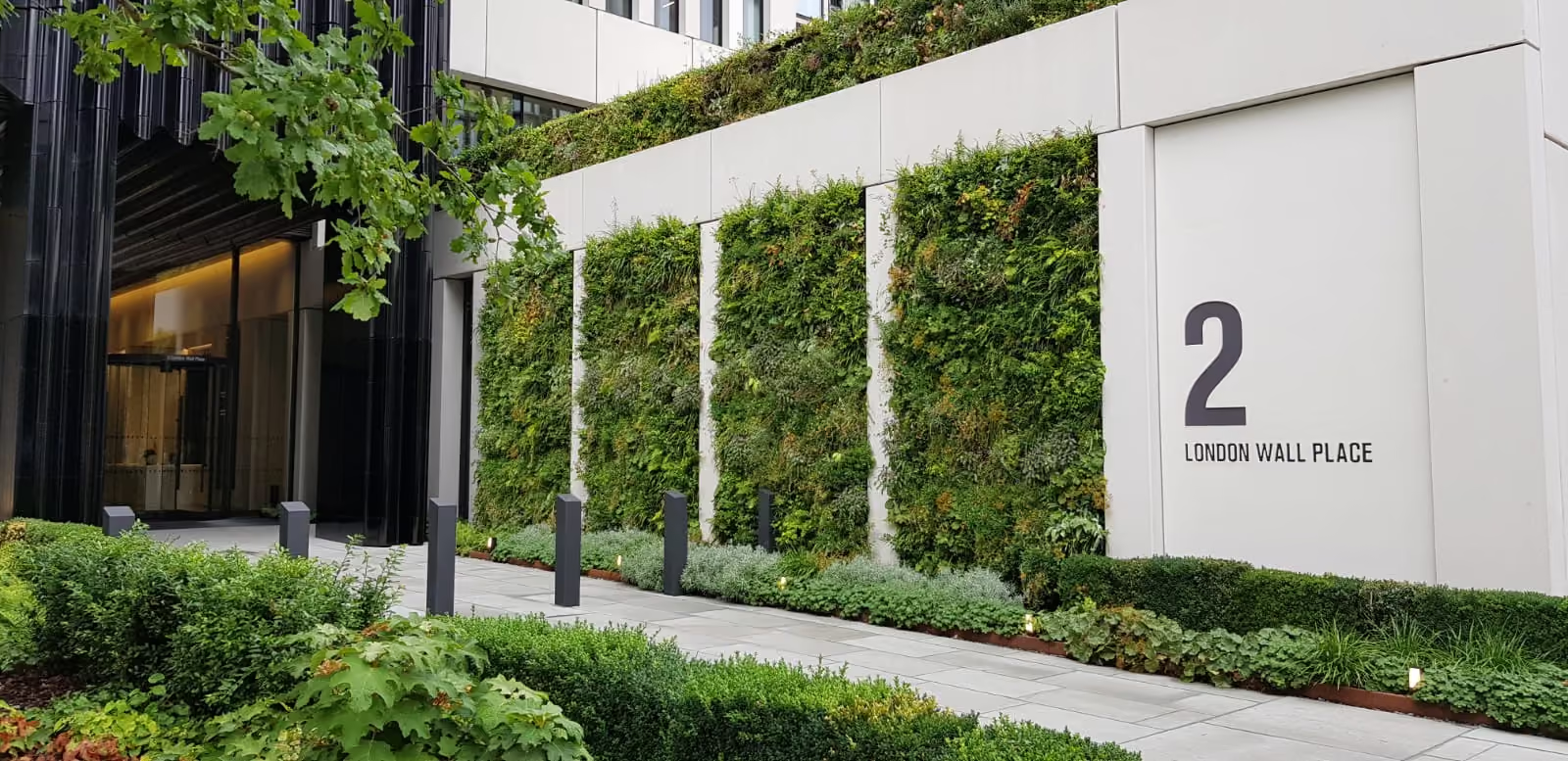
- London Wall Place: This RIBA award-winning scheme used native, historically significant plant species to create new habitat in the heart of the City.
BNG and the planning process
At what stage of a project does BNG need to be considered?
BNG should be considered at the very start of a project. Ideally, before the design process — and certainly before breaking ground.
Why is it important to engage ecologists, landscape architects, and green infrastructure vendors early in the development process?
- It’s required for planning: Under biodiversity net gain legislation, project teams must assess the biodiversity baseline and submit a biodiversity gain plan to the local authority.
- It prevents costly mistakes: Early planning around biodiversity reduces the risk of construction unintentionally destroying critical habitats (and causing the required biodiversity value to increase in order to result in 10% net gain).
- It can increase BNG scores: Horticulturalists can consult on the best plant palette, natural substrate, and design to improve the habitat’s distinctiveness, condition, and time it will take for delivery — potentially improving the overall biodiversity value.
Who is responsible for delivering BNG?
In practice, achieving BNG is collaborative. It typically involves:
- An ecologist (to assess baseline habitats and complete the biodiversity value calculation)
- Landscape architects (to design habitat enhancements)
- Architects and engineers (to integrate solutions into the build)
- The local planning authority (to review and approve the biodiversity strategy)
The legal responsibility for delivering biodiversity net gain sits with the developer or landowner. The landowner is also responsible for ensuring the habitats are maintained in line with BNG requirements.
How long do BNG habitats need to be maintained?
Any habitat created or enhanced to meet BNG requirements must be secured for a minimum of 30 years. This applies to both on-site and off-site habitats and is a legal condition of planning, not a recommendation.
This is why it’s critical to design habitats with longevity in mind using organic substrate and plants suited to the site’s sun exposure, wind, and temperatures. It’s also vital to account for maintenance fees at the design stage.

Achieving BNG in urban environments
What types of green infrastructure can contribute to BNG?
A range of green infrastructure types can contribute biodiversity units toward a project's BNG target. Common solutions include:
- Living walls: Vertical planted systems fixed to building façades or freestanding structures. These are particularly valuable on sites where ground space is limited.
- Green roofs: Roof-based vegetation that can include grass, wildflowers, and/or larger plants such as shrubs and trees.
- Sustainable drainage features (SuDS): Systems that manage stormwater, such as rain gardens and bioswales.
How do I know which BNG solutions are right for my project?
There is no single correct solution — the right green infrastructure depends on the scheme’s objectives and what the site allows. And some schemes call for a combined approach.
Key considerations include:
- Site area: Is ground space limited?
- Roof structure: Is the roof flat, and can it support the weight of vegetation?
- Project objectives: Are energy efficiency and water management important to the scheme? Is the project targeting BREEAM credits?
Do I need specialist support, and what should I look for?
While the biodiversity metric calculation is completed by an ecologist, the design and delivery of high-performing green infrastructure requires specialist expertise.
When selecting a green infrastructure provider, look for:
- Horticultural expertise: Systems designed around plant health tend to outperform those led by engineering or aesthetics. Living walls that use natural substrate and native species can improve BNG scores.
- A range of solutions: Look for a green infrastructure partner who can consult on and deliver a full suite of solutions, such as modular living walls, wire and mesh green walls, sedum roofs, and intensive green roofs. Learn which green infrastructure systems we offer at Viritopia.
- A collaborative approach: Green infrastructure projects for BNG are most successful when vendors engage early in the design process — testing feasibility, advising on plant selection, and consulting on fixings and build-ups.
- A reputation for longevity: BNG habitats must perform for 30 years. Look for evidence of successful maintenance programmes: a record of green schemes that have thrived over several years.
Where can I find the latest BNG guidance and tools?
BNG policy is updated regularly as the government refines the requirements and exemptions. For the most up-to-date information, the best sources are the UK Government website and the Planning Advisory Service (PAS).
Refer to an ecologist for project-specific guidance. Viritopia works closely with reputable ecology firms, and we’d be pleased to make an introduction.
For architects and design professionals looking to deepen their understanding of BNG, Viritopia offers a RIBA-approved CPD: Greening for BNG & UGF. Learn more about this CPD.
Looking to learn more about biodiversity net gain?
Glossary of BNG terms
Biodiversity
The variety of plant and animal life in a particular habitat or ecosystem. Healthy biodiversity underpins functioning ecosystems and the services they provide, from pollination and clean water to climate regulation and human wellbeing.
Biodiversity Net Gain (BNG)
A planning requirement in England that ensures new development leaves biodiversity in a measurably better state than before. Developers must deliver at least a 10% improvement in biodiversity value, secured for 30 years.
Biodiversity units
The unit of measurement used in the statutory biodiversity metric to quantify the biodiversity value of a site. This is calculated using a habitat’s area, distinctiveness, condition, and strategic significance, among other factors.
Baseline biodiversity value
The biodiversity score of a site before development begins. This is calculated by an ecologist and forms the reference point for the required 10% increase.
Condition
A measure of how well a habitat supports biodiversity, based on its structure, vegetation diversity, and ecological function. Scored as Poor, Moderate, or Good in the statutory biodiversity metric.
Distinctiveness
A measure of a habitat's ecological importance at a national scale, reflecting its rarity and irreplaceability. Scored from Low to Very High in the statutory biodiversity metric.
Ecologist
A qualified professional who assesses habitats, calculates biodiversity value, and advises on habitat design. Required for BNG baseline assessments.
Environment Act 2021
The UK legislation that introduced mandatory biodiversity net gain requirements in England.
Green infrastructure (GI)
Nature-based systems integrated into the built environment, such as living walls, green roofs, and sustainable drainage features, designed to deliver environmental and ecological benefits.
Habitat creation
The process of establishing new habitats where none previously existed, such as installing a green façade or planting a wildflower meadow.
Habitat enhancement
Improving the quality or ecological condition of an existing habitat to increase its biodiversity value.
Off-site biodiversity units
Biodiversity gains delivered on land outside the development boundary when the required net gain cannot be achieved entirely on-site.
Priority habitat
Habitats identified as being of particular importance for conservation. Impacts to priority habitats are subject to stricter assessment.
Statutory biodiversity metric
The government-issued calculation tool used to measure biodiversity value before and after development. It converts habitat characteristics into biodiversity units.
Strategic significance
A multiplier within the formula to calculate biodiversity that reflects whether a habitat contributes to local biodiversity priorities or nature recovery strategies. Ranges from 1.00 (not identified as strategic) to 1.15 (within a designated strategic area).
Substrate
The growing medium in which plants are rooted. Natural, soil-based substrate supports greater biodiversity than artificial alternatives and is a key factor in achieving a Good condition score.
Sustainable drainage systems (SuDS)
Landscape features designed to manage surface water in a natural way, such as rain gardens and bioswales, which can also contribute to biodiversity.
Authored by

Explore more insights
Discover the latest in green infrastructure
Your Living Wall in the Spring: What to Expect

Your Living Wall in Winter: What to Expect

What Is Environmental Architecture and Why Is It Important?
Urban Greening: How Cities Are Turning Grey Into Green
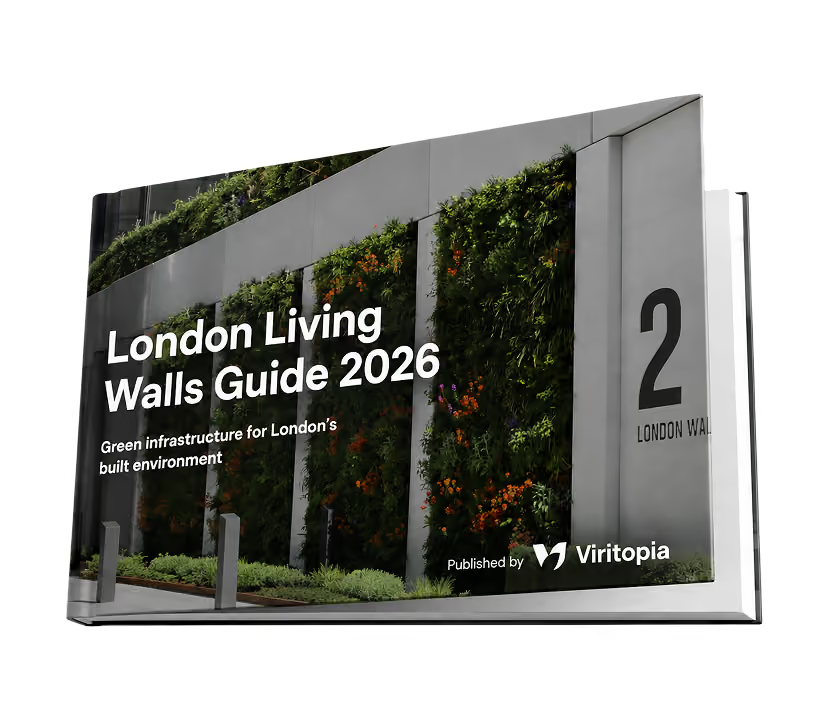
Viritopia’s New Guide Explores the Role of Living Walls Amidst Draft London Plan Consultation
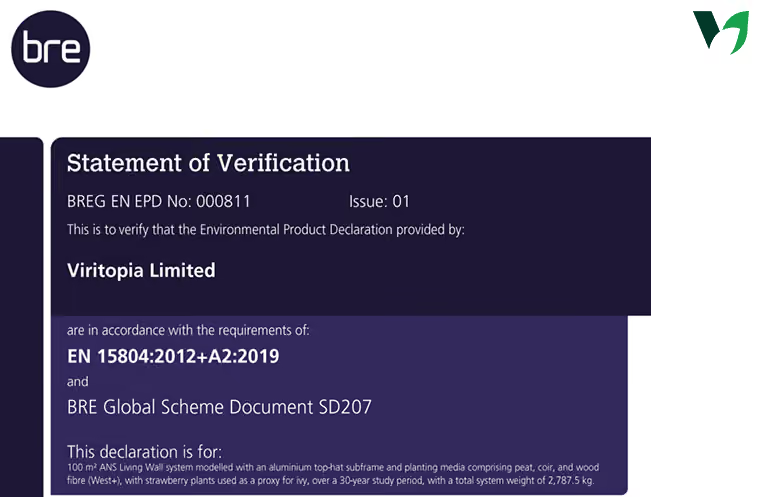
The Viritopia® Living Wall System Achieves a Verified EPD

