
The Science of Carbon Sequestration in Ecological Architecture
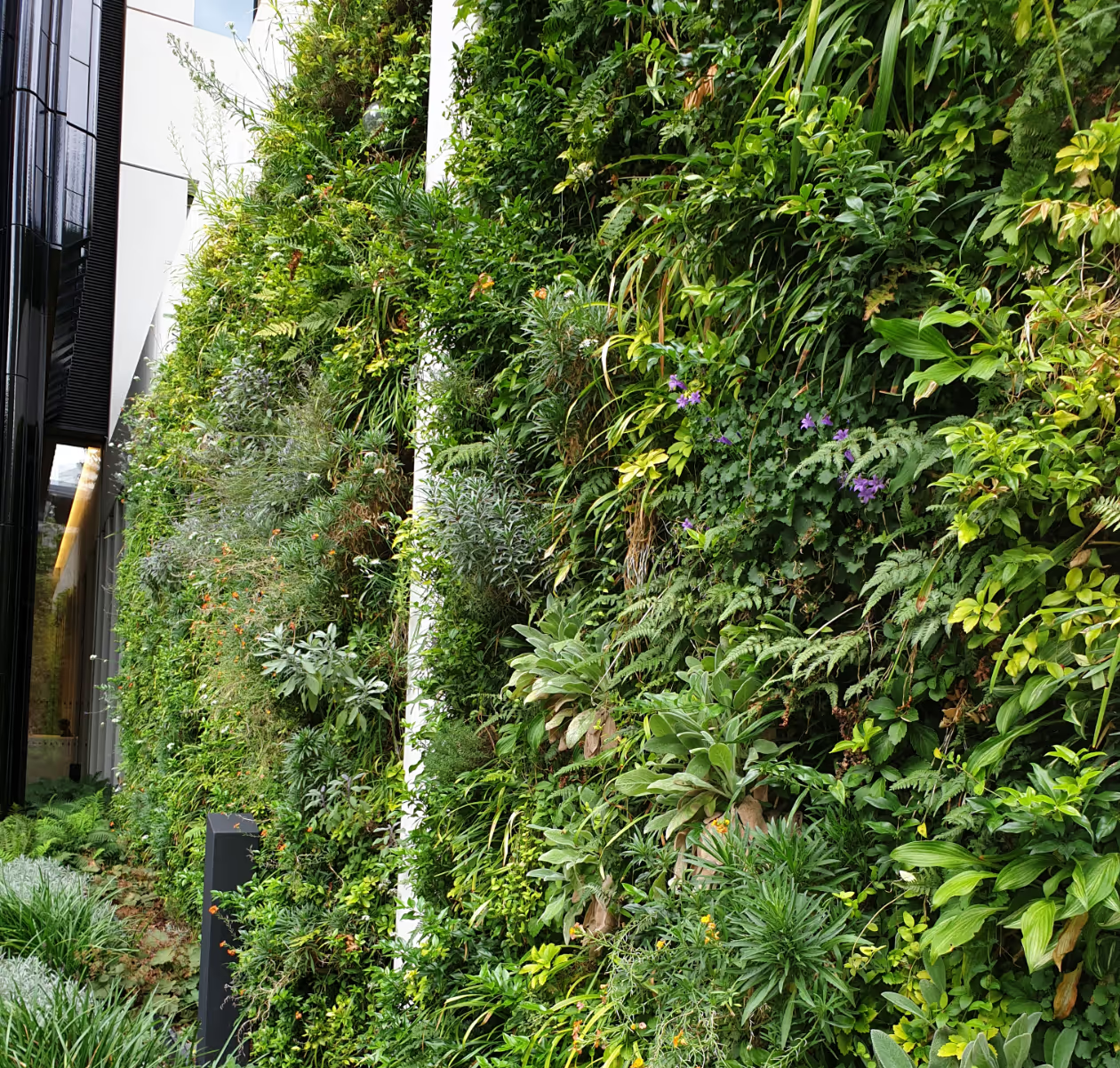
Ecological architecture, particularly in the form of living walls, has emerged as a powerful tool in the fight against climate change.
Let's delve into the science behind this process and explore how living walls contribute to a greener future.

Photosynthesis: Nature's Carbon Capture
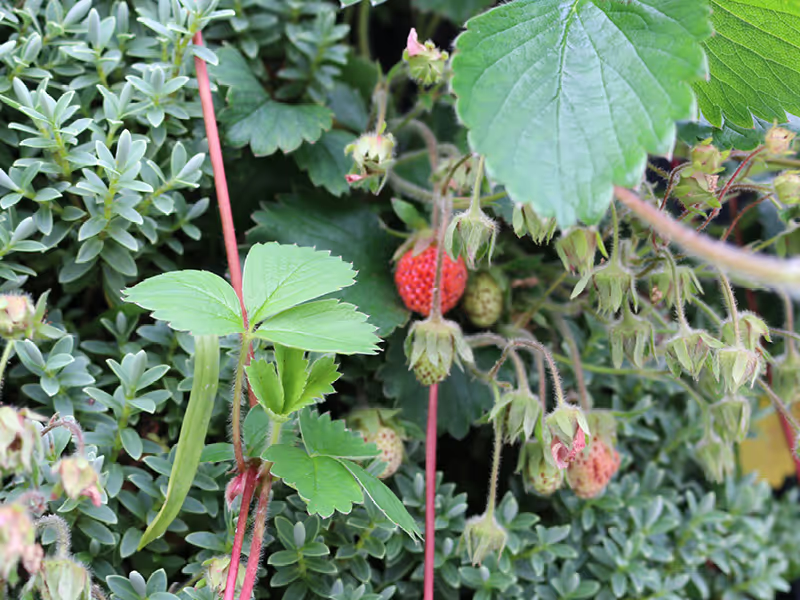
At the heart of carbon sequestration in living walls is the process of photosynthesis. Plants absorb carbon dioxide from the air, using it along with water and sunlight to produce glucose and oxygen.
This process not only removes CO2 from the atmosphere but also stores it in the plant's biomass and the surrounding soil.
Soil as a Carbon Sink
The soil in living wall systems acts as an additional carbon sink. As plants grow and die, their organic matter is incorporated into the soil, where it can be stored for extended periods.
This process, known as soil carbon sequestration, can significantly contribute to the overall carbon capture potential of living walls.
Quantifying Carbon Sequestration in Living Walls
The carbon sequestration capacity of living walls varies depending on factors such as plant species, wall size, and local climate conditions. However, studies have shown that these green structures can make a substantial impact:
- A single square meter of living wall can sequester up to 2 kg of carbon dioxide annually
- Large-scale projects, like Europe's largest living wall in Salford, with its 350,000 plants, have the potential to sequester several tons of CO2 each year.
Enhancing Carbon Sequestration in Living Walls
To maximise the carbon sequestration potential of living walls, consider the following strategies:
- Plant Selection: Choose species with high carbon sequestration rates and adapt well to vertical growth.
- Optimised Growing Conditions: Ensure proper irrigation, nutrient supply, and sunlight exposure to promote robust plant growth.
- Natural Soil-Based Substrates:Use natural soil-based substrates rather than synthetic alternatives. Natural soils typically have higher carbon storage capacity and support more diverse microbial communities, enhancing overall carbon sequestration.
- Regular Maintenance: Proper care and maintenance of living walls ensure optimal plant health and longevity, maximising their carbon sequestration potential over time.

Real-World Impact: Europe's Largest Living Wall
To illustrate the significant potential of living walls in carbon sequestration and urban greening, let's consider a landmark project: Europe's largest living wall in Salford, UK.
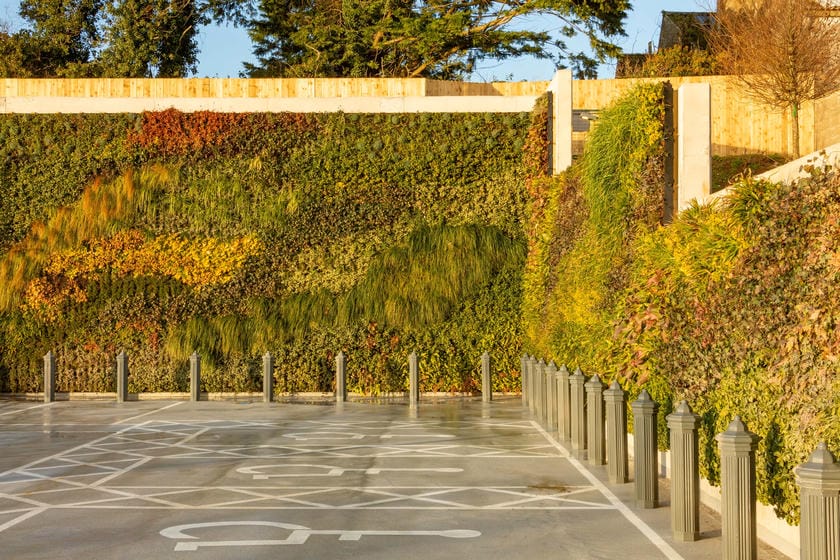
This impressive installation, completed by our team at Viritopia, covers the facade of one of the UK's most environmentally friendly office buildings. With approximately 350,000 plants adorning its surface, this living wall is a testament to the scale at which ecological architecture can be implemented.
Not only does it serve as a powerful carbon sink, potentially sequestering several tons of CO2 annually, but it also provides numerous additional benefits.
The wall significantly enhances local biodiversity, attracting various wildlife to the urban environment. Its striking appearance, described as "loud and proud," has transformed the building into a local landmark, demonstrating how living walls can simultaneously address environmental concerns and elevate urban aesthetics.
This project exemplifies how large-scale living wall installations can play a crucial role in our cities' fight against climate change while creating more vibrant, liveable urban spaces.

Beyond Carbon Sequestration
While carbon sequestration is a significant benefit of living walls, these green structures offer numerous other environmental advantages:
Air Quality Improvement: Living walls can trap dust and filter pollutants from the air, with some projects capturing over 25,000 kg of dust annually
- Biodiversity Enhancement: These vertical gardens create habitats for various species, supporting urban biodiversity.
- Energy Efficiency: By providing natural insulation, living walls can reduce a building's energy consumption for heating and cooling.
Book a Consultation with Viritopia
With over 20 years of experience of designing and maintaining biophilic infrastructure, Viritopia can create a detailed plan of how a scheme will meet regulatory requirements.
We assist with faster planning process and provide you with what’s needed to elevate your project. Book a living wall consultation with our expert team today or find out more about our green walls and their benefits.

Explore more insights
Discover the latest in green infrastructure
Urban Greening: How Cities Are Turning Grey Into Green
Viritopia’s New Guide Explores the Role of Living Walls Amidst Draft London Plan Consultation

The Viritopia® Living Wall System Achieves a Verified EPD
Living Walls & Green Roofs for Urban Water Management
Biodiversity Net Gain: What It Means & How It Works

Living Wall Fire Safety: Testing, Regulation, and Risk Mitigation

