
How Green Walls Help Urban Plots Meet BNG Requirements

In February 2024, Biodiversity Net Gain became a mandatory requirement in England. As a result, all new developments are legally required to deliver a 10% net gain in biodiversity from the site’s baseline.
For urban plots, meeting that target through ground-level planting alone isn't always possible. Ground space around a building might be covered by hard surfaces like concrete — or, the ground space might be limited altogether. Fortunately, there are creative solutions. This article explores why green walls are great tools for achieving biodiversity net gain.
Note: For a breakdown of how BNG works and what it means for your development, read our guide to biodiversity net gain.
Green infrastructure for biodiversity net gain
Planting doesn't have to happen at ground level for BNG. A building’s surfaces — its roof and walls — are also fair game.
Green roofs and living walls can count towards your BNG calculations when designed with ecological value in mind. Both types of green infrastructure support the BNG score by introducing new habitat where there would otherwise be none.
Intensive green roofs vs. green walls for BNG
The best solution depends on your development’s design. Green roofs work well when you have flat, accessible roof space that can bear the weight of soil.
Living walls are the better choice when your roof:
- Is too pitched
- Can’t support the added weight
- Or is already occupied by equipment (as is often the case with data centres)
Living walls are particularly helpful for maximising green coverage on a small urban plot. They make use of vertical space to achieve 10% biodiversity net gain.
How green walls help meet BNG
Some living walls support biodiversity more than others. It all comes down to the wall’s design. Green walls that help drive biodiversity net gain integrate plant palettes that benefit the local ecosystem — in other words, species that provide food, shelter, and habitat for wildlife.
1. Attract pollinators
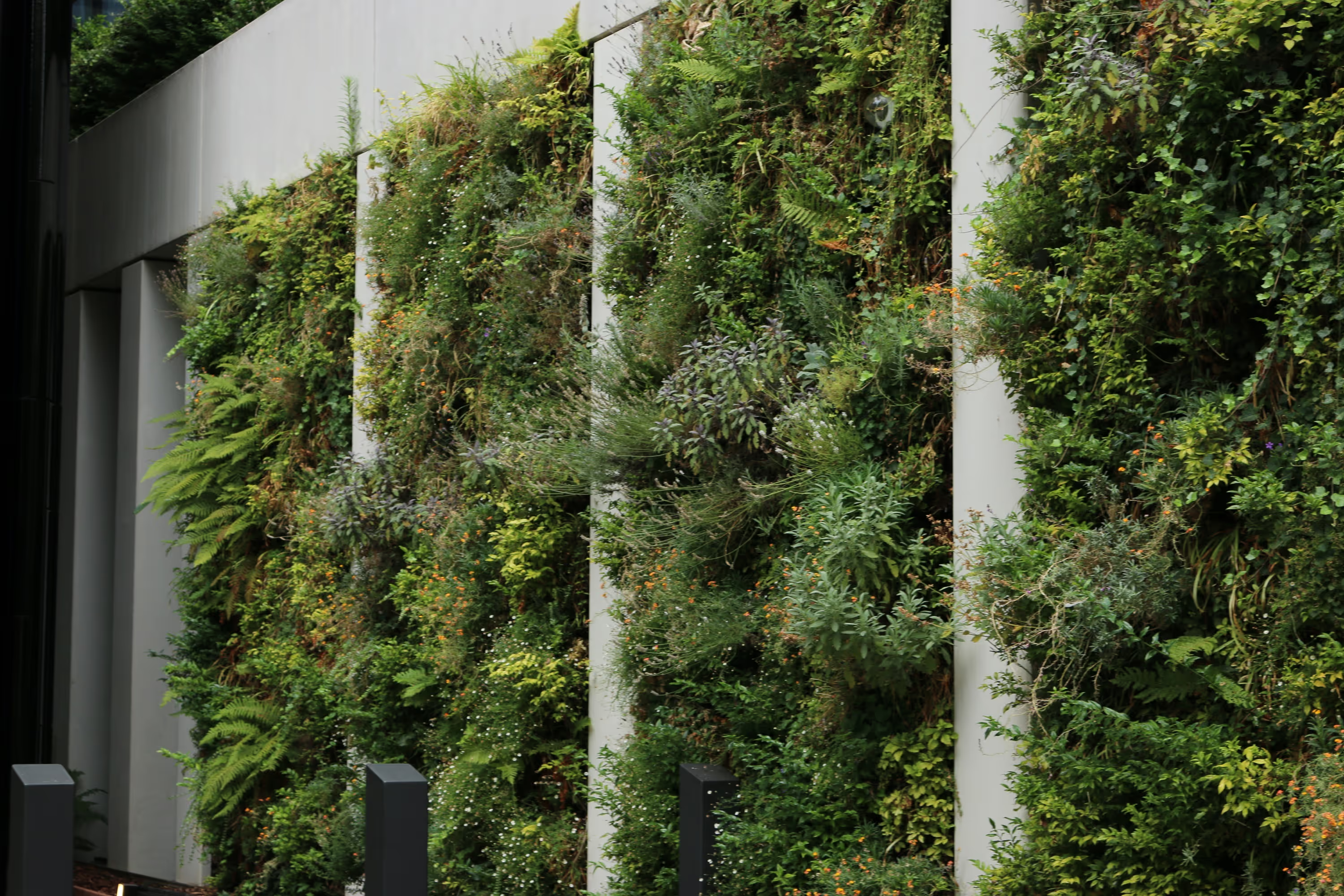
Flowering plants are often scarce in cities. As a result, so are pollinators. Living walls can include multiple kinds of plants that provide pollen and nectar for bees, butterflies, and other pollinators.
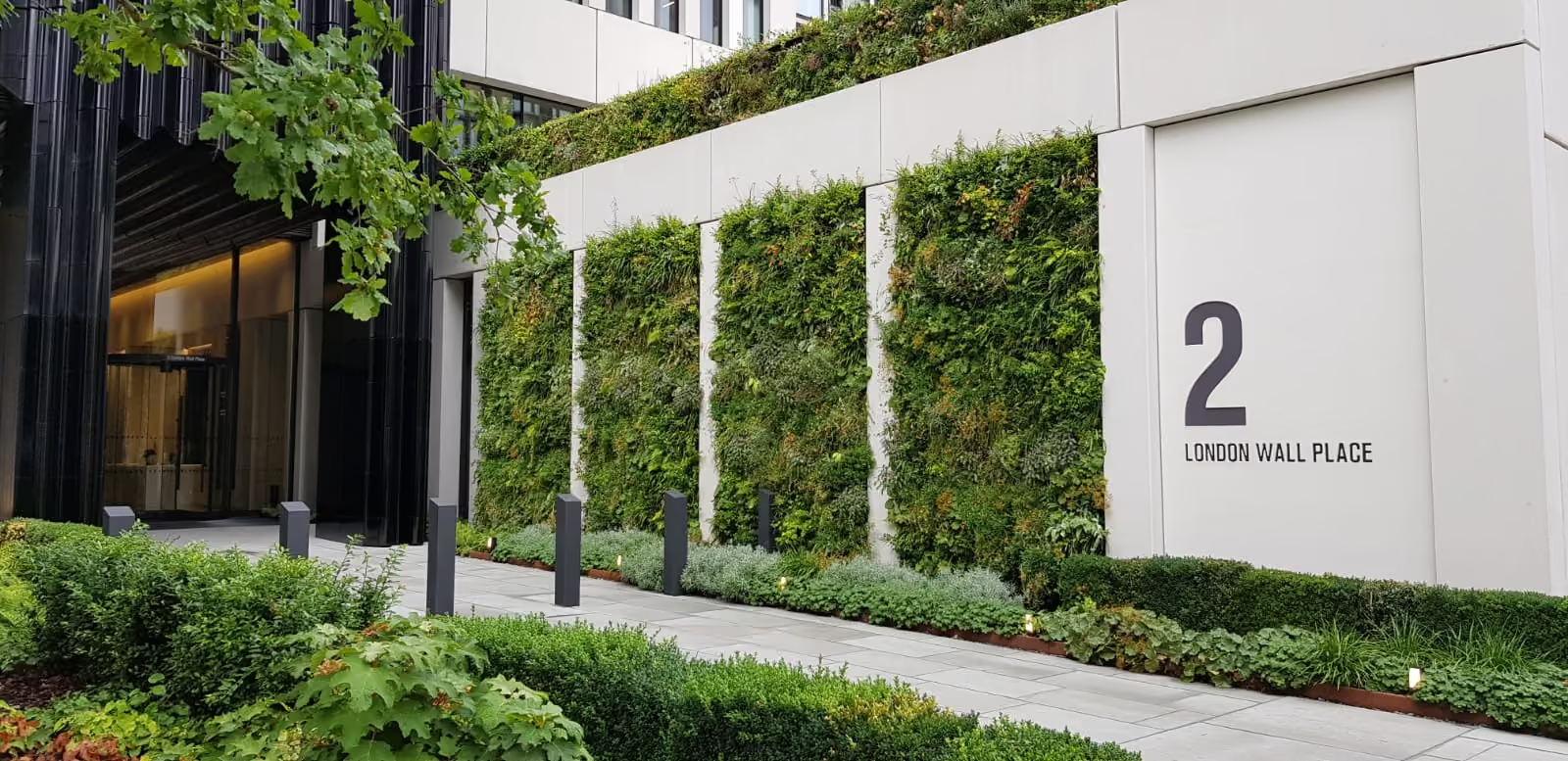
For example, the green wall at London Wall Place was designed with native plants that attract bumblebees and pollinating insects.

2. Provide food and foraging opportunities
Beyond pollen and nectar, plants in living walls can also offer berries, seeds, and other food sources that support birds and insects throughout the year. Choosing species that provide something in every season ensures your wall is ecologically valuable year-round, not just in summer.
3. Offer shelter to wildlife
Urban environments offer very little refuge to birds, bats, small mammals, and insects, particularly during colder months. Living walls can offer shelter in the form of soil for burrowing insects, and cover for other wildlife including birds.
In fact, a 2014 PhD thesis by Caroline Chiquet, which studied biodiversity across 22 UK living walls, found that birds were more present in residential areas with living walls than similar areas without them. In total, Chiquet recorded 9 bird species, 13 snail species, 33 spider species, and more than 2,600 morphospecies across the studied walls.
During a maintenance visit to the Mailbox development in Stockport, UK, our team found bird nests with eggs in the living wall — a sign of a healthy habitat.

4. Connect fragmented habitats
In dense urban areas, green spaces are often isolated from one another, making it harder for species to move, feed, and breed. A living wall can act as a vertical corridor, bridging those gaps and helping to reconnect fragmented habitats across the urban landscape.
5. Drive awareness and education
When you live in a city, nature can feel far away. Green space is limited, wildlife is scarce, and it's easy to go about your day without thinking much about the outside world.
Living walls with street-level planting connect people to nature, which sparks curiosity and starts conversations about the environment.
Viritopia’s living wall at Eden made history as Europe’s largest green wall, delivering an extraordinary 2,000% biodiversity net gain. To this day, the living wall draws attention to nature and helps engage people in conversations about sustainability and urban biodiversity.

How to optimise a living wall for biodiversity net gain
Design is important when you’re planning a green wall for biodiversity net gain. Here’s what to consider to ensure your green wall maximises ecological value.
Choose the right plant species
Plant selection is the single greatest factor in how much ecological value your living wall delivers. Engage an ecologist early to develop a more complex plant palette, which can help elevate the habitat distinctiveness from low to medium within the BNG metric.
To maximise your BNG contribution:
- Choose native species: Prioritise plants that are indigenous to your ecosystem to best support local wildlife.
- Design for each season: Choose species that flower across different seasons to support pollinators emerging in early spring and provide berries or seeds for birds through the winter.
- Use bulbs and perennials: Species like snowdrops and crocuses provide early nectar, while bluebells and daffodils naturally multiply over time, increasing the green wall's biodiversity value year over year without additional planting.
- Balance the percentages: Aim for 75-80% of your planting palette to hold significant ecological value, with around 20-25% evergreens to provide year-round cover and colour.
Design a façade-based living wall
A façade-based living wall gives you the most control over biodiversity outcomes. In façade-based green walls, plants grow directly from modules that are affixed to the building’s surface. Other systems include:
- Wires-and-climbers, which uses climbing plants that grow from the ground
- Façade planters, which use individual troughs spaced across the building
Façade-based living walls offer the greatest coverage over the wall — virtually 100% — as well as the most flexibility in plant species selection. Instead of being limited to climbing or vining species, you can design palettes with various types of wildflowers, native grasses, bulbs, and more.
Opt for soil substrate
Living walls can be grown hydroponically, in a soil-based substrate, or in manmade substrates like rockwool. Soil substrates are more beneficial for biodiversity purposes, as they support a greater variety of plant species and provide habitat for burrowing insects — something a hydroponic system can't offer.
Include habitat boxes
Insect hotels, bird boxes, and bat boxes can be incorporated directly into soil-based modular living wall systems. Choose them based on local priority species and nearby habitats.

Account for maintenance
BNG policy requires habitats to be maintained for a minimum of 30 years, including green infrastructure such as living walls and green roofs. Maintenance is also critical for insurance, as fire ratings are contingent on a properly functioning irrigation system.
Factor green wall maintenance into your design, considering how both plants and the irrigation system will be managed and replaced over time to ensure the wall retains its ecological value.
Need help building a green wall for BNG?
Viritopia designs and installs living green walls that deliver measurable Biodiversity Net Gain score improvements. We can help you design a wall that maximises ecological value for your site and meets your 30-year BNG obligations.

Explore more insights
Discover the latest in green infrastructure
Your Living Wall in the Spring: What to Expect

Your Living Wall in Winter: What to Expect

What Is Environmental Architecture and Why Is It Important?
Urban Greening: How Cities Are Turning Grey Into Green
Viritopia’s New Guide Explores the Role of Living Walls Amidst Draft London Plan Consultation

The Viritopia® Living Wall System Achieves a Verified EPD

