
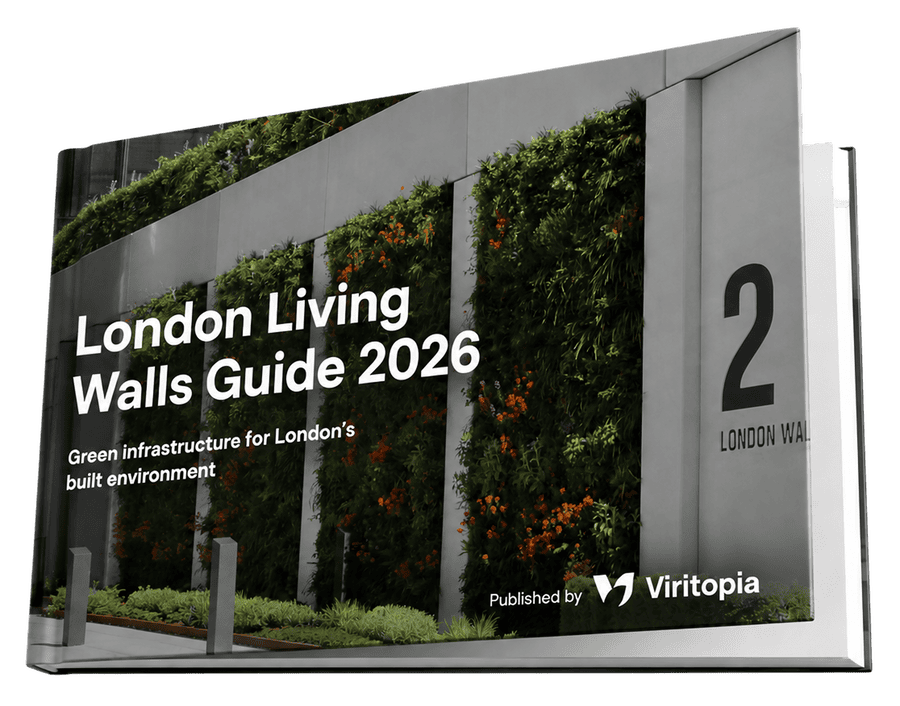
London Living Walls Guide 2026
Green infrastructure has never been more relevant to London's future. Explore the science and guidance behind living walls.
Frameworks like Biodiversity Net Gain, the Urban Greening Factor, and the Draft London Plan all place emphasis on creating more resilient, biodiverse, and climate-adapted developments.
Living walls are part of the conversation due to the impact they can deliver on urban sites with limited ground space. They reduce surface temperatures, manage rainwater runoff, and support biodiversity in plots where conventional planting isn't possible.
Drawing on current research, evolving policy, and decades of experience with green infrastructure, Viritopia’s London Living Walls Guide 2026 explores the role living walls can play in London's journey to becoming a net zero city by 2030.
Inside the guide:
- What a living wall actually is and how it works
- The evidence behind their environmental impact
- Common misconceptions that present barriers to adoption
- Guidance for specifying living walls on data centres, hotels, and other developments
- Practical advice for planning officers and local authorities reviewing proposals
Living walls are not a silver bullet solution to climate change. But they are one of the few viable tools available that can be deployed at scale, in the densest parts of the city, in the time frame that matters.
Steve McIntyre
Principal Urban Environmental Consultant, Viritopia
Download the living walls guide
Explore the evidence, planning context, and practical guidance behind living walls in London's built environment.
Enter your details below and we'll email you a copy of the London Living Walls Guide 2026.
